How to Choose a Reliable Vending Machine Manufacturer for Your Brand
Your brand will live on someone else's machine. Check the factory, the branding, the software and the support before your name goes on the cabinet.
You are a distributor or brand owner about to put your name on a vending machine. That changes the decision completely. When the machine carries your logo, your colours and your screen, every fault becomes your fault in the customer's eyes — the machine that jams, the screen that freezes, the payment that fails. The factory is no longer just a supplier. It is the maker of your brand's reputation in the street.
Choosing a manufacturer for your brand means checking four things most buyers skip: whether it is really a factory, whether it can brand the machine properly, whether the software carries your brand too, and whether it will still answer the phone after the first order. This guide works through each one.
VFresh Supply is the export channel for the VFresh intelligent equipment base in Foshan, China, run by Foshan Weixianwu Internet Service Co., Ltd. The factory covers 37,700 square metres, holds 700+ patents and software copyrights, is certified to ISO9001, and its machines carry CE and RoHS. It works across five business lines — vending machine terminals, shared rental self-service equipment, AI drones, AI robots and unmanned vehicles, and an AI model SaaS cloud platform — and it supports OEM and ODM orders. Products are sold in 80+ countries, the minimum order quantity is 1 unit, and buyers pay by international bank transfer (T/T) or through Alibaba.
1. Check the factory before you check the catalogue
Your brand needs a manufacturer, not a middleman. A trading company can order machines with your logo; only a factory can fix a design problem, change a specification, or hold spare parts for your model. Check:
- Identity. The registered company name, the factory address, and that the name on the invoice, the certificates and the shipping documents all match.
- Size and lines. A 37,700 square metre base with five business lines is a manufacturer with production capacity. Ask for photos or a video call from the production floor.
- Patents and software ownership. With 700+ patents and software copyrights, ask which patents cover your machine and who owns the control software. If the factory does not own the software, it cannot change it for your brand.
- Export history. Products in 80+ countries means the factory has already adapted machines for different voltages, plugs, payment methods and languages. Ask which markets your model has shipped to.
Run the full factory checks in How to Vet a Fresh Food Vending Machine Manufacturer and the manufacturer audit before you discuss branding at all.
2. Branding: what can actually carry your name
“Custom branding” means different things to different factories. Ask exactly what can be branded, and get a sample or a photo of each one:
- Cabinet. Colour, logo placement, and any printed panels. Ask whether the colour is a standard option or a custom run, and whether a custom colour changes the price or the minimum quantity.
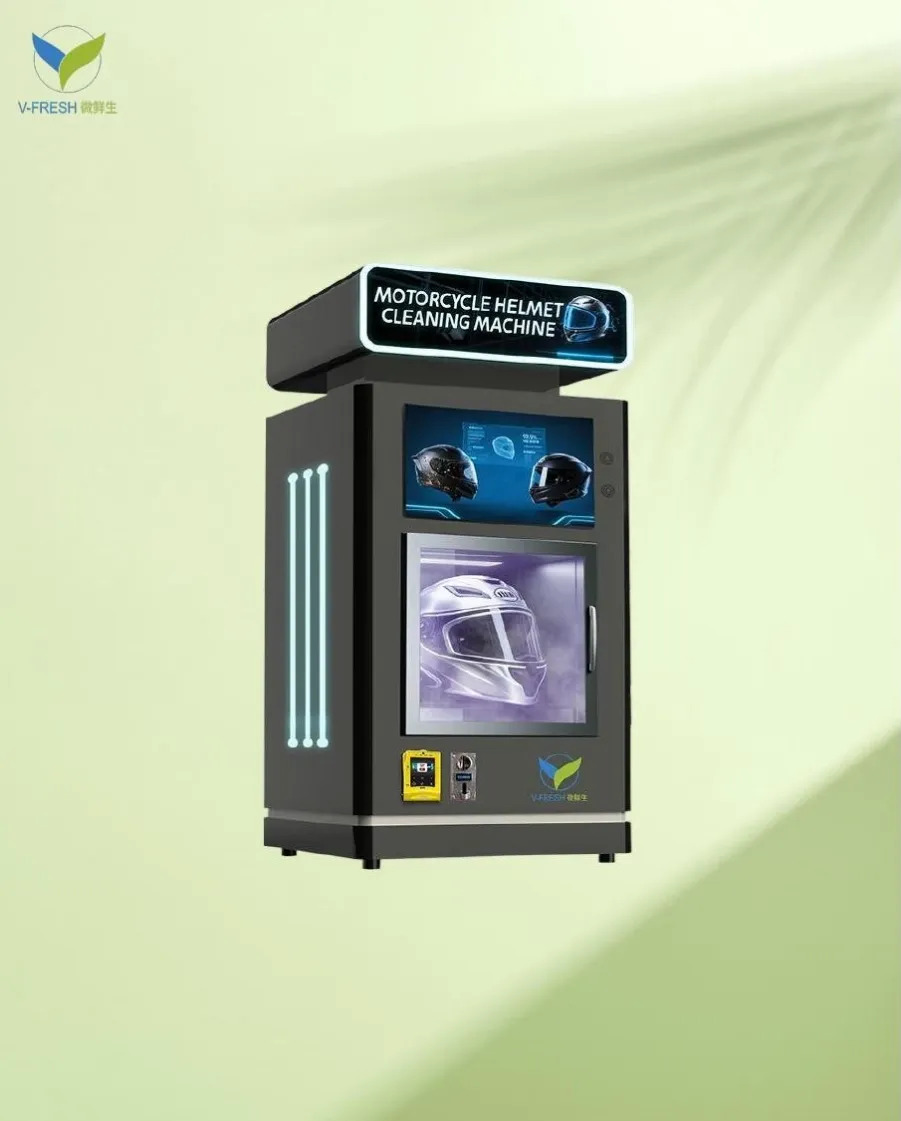
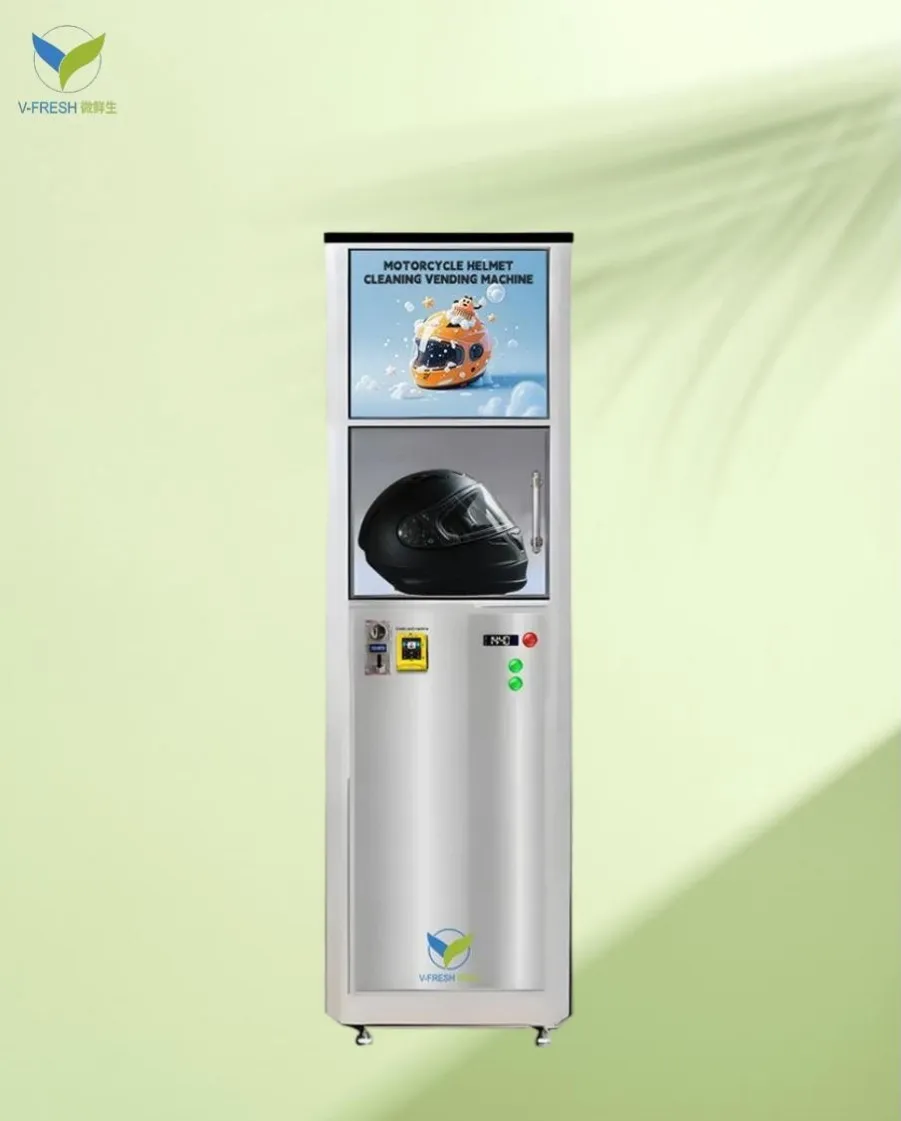
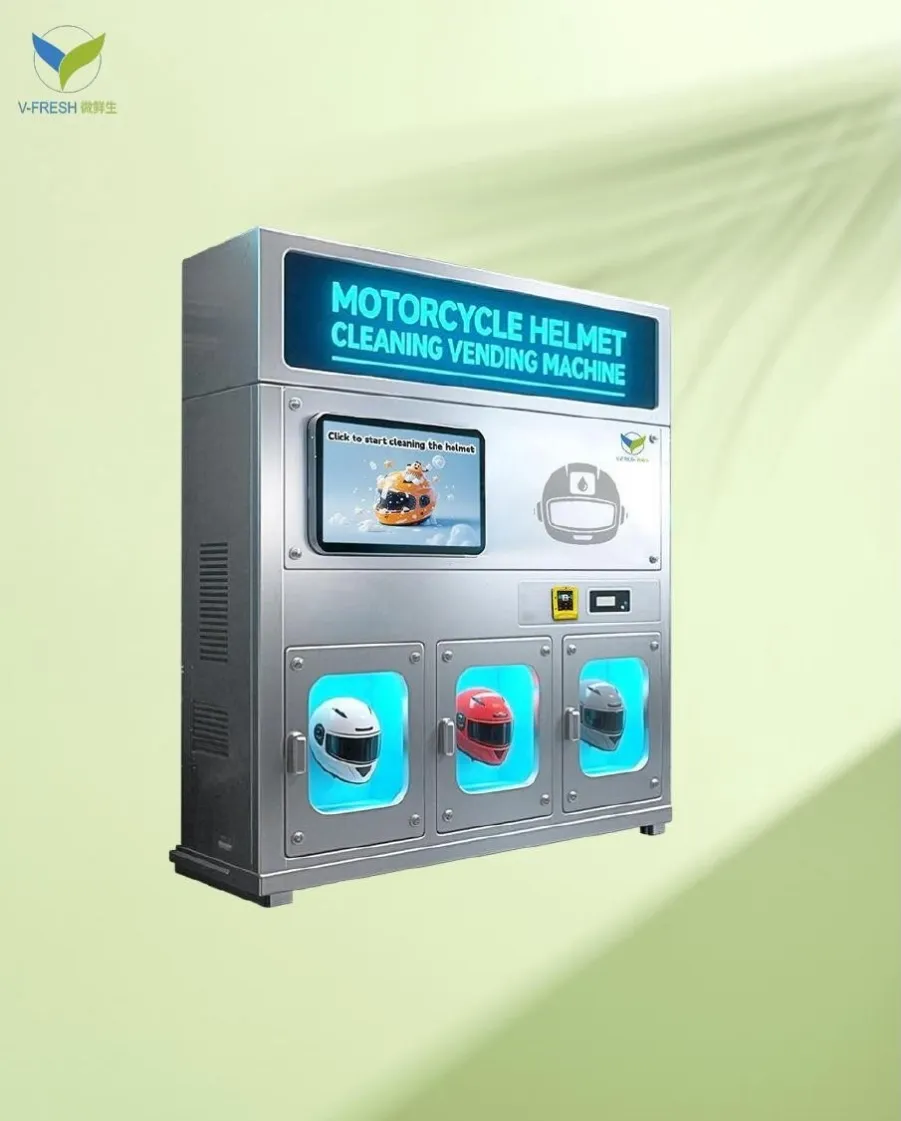
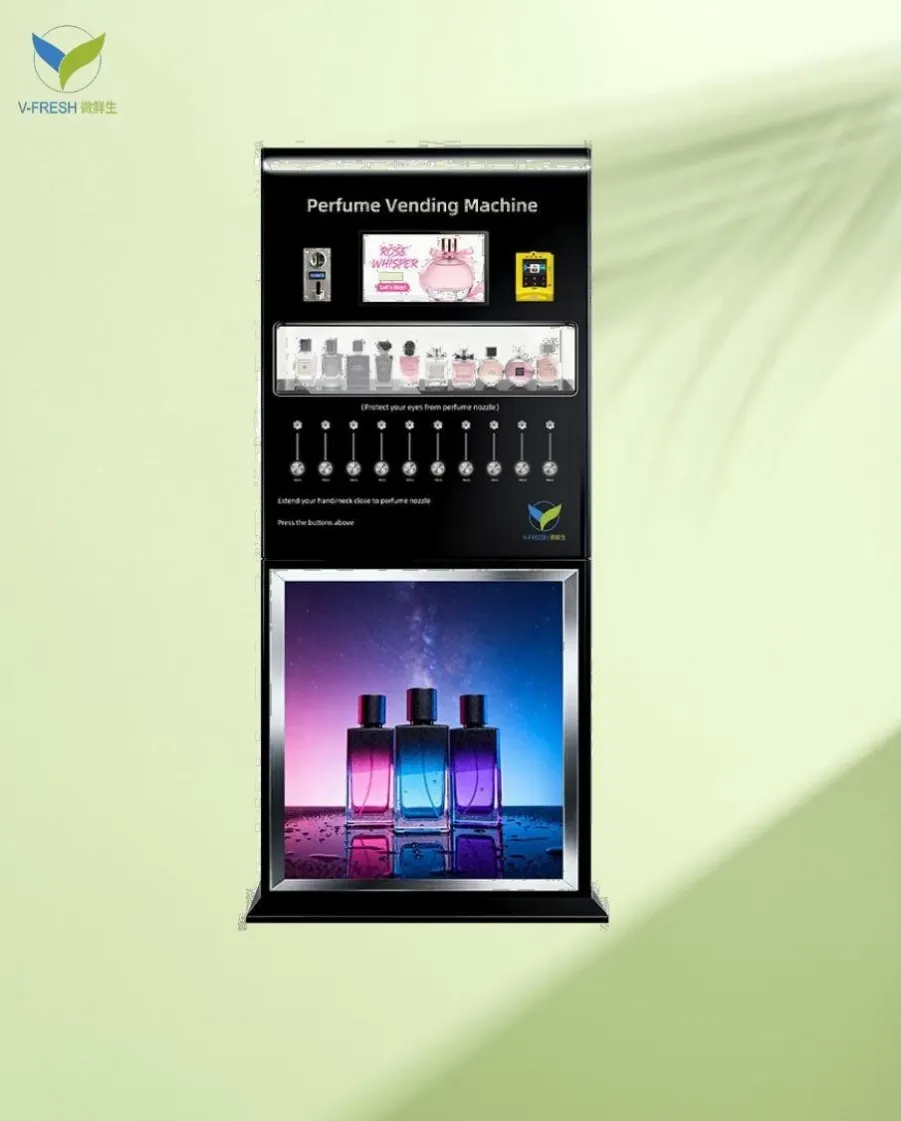
- Screen. The screen is what customers look at: the floor-standing perfume machine has a 42 inch screen, the wall-mounted perfume machine a 10.1 inch screen, and the helmet cleaning desktop machine a 15.6 inch screen. Ask whether the screen shows your logo, your colours and your language, and who provides the screen artwork — you, or the factory.
- Software and receipts. Ask whether your brand appears in the software, on the payment screen and on any receipt or message the customer sees.
- Packaging. Ask whether the box and the manual can carry your brand, and what that costs.
Agree the artwork files, the colours and the exact placement in writing, and ask for a photo of the first branded unit before the rest are produced. A branding mistake found on one unit is a correction; found on fifty, it is a write-off.
3. OEM or ODM: which one fits your brand
OEM means the factory builds its existing machine with your branding. ODM means the factory designs or changes the machine for you. Most brands should start with OEM: it is faster, cheaper, and the machine is already tested. ODM is for a brand that needs a different size, a different function or a different look that the standard range does not offer. Read the full comparison in OEM vs ODM Vending Machine: Which Manufacturing Model Is Right for Your Brand?. Whichever you choose, agree in writing who owns the design changes, the artwork and the software changes — and what happens to them if you move to another factory.
4. Software: the part of your brand customers use most
Customers touch the screen and the payment system more than the cabinet. Before you commit, confirm:
- Which payment methods are fitted on your model — coin, bill, credit card and QR code, depending on the model — and which work in your country.
- Whether prices can be changed remotely, and whether you can see sales by machine and by product.
- What language the screen and the software use, and who translates it.
- Whether the factory's AI model SaaS cloud platform is included, what it does for you, and what it costs.
- Who updates the software, and how updates reach machines already on site.
If the factory cannot answer these plainly for your model, the software is not under its control — and a brand built on software you cannot control is a brand you cannot protect.
5. Quality consistency: the second order must match the first
A brand dies when the second order is worse than the first. Ask how the factory keeps quality consistent across orders: what is checked before shipping, whether there is a test record for each unit with its serial number, and what happens if a machine fails the check. VFresh checks every machine before it leaves the factory — ask what that check covers for your model, and ask for the record for your unit. Then check the specification for your model against the machine that arrives: size, weight, screen size, payment methods, and the number of compartments — for example, 5 x 150 ml fragrances on the wall-mounted perfume machine, 10 x 150 ml on the floor-standing one, and 12 powder pipelines on the protein shake machine.
6. Support and spare parts: your brand's after-sales is the factory's after-sales
When your customer reports a fault, they report it to you — and you report it to the factory. So check the support chain before you order: who is your technical contact, in what language, and how fast do they reply? VFresh usually replies within 24 hours. Get the spare parts list with prices, the supply period for your model, and which parts are standard and can be bought locally. Agree the warranty terms in writing — warranty terms for VFresh machines are to be confirmed with the factory before you order — including who pays for parts and shipping in the first weeks.
Decision checklist
| Check | What good looks like | Red flag |
|---|---|---|
| Factory | Named factory, address, production evidence | Only a trading name |
| Branding | Cabinet, screen, software and packaging specified | “We can brand anything” with no list |
| OEM / ODM | Model chosen and ownership agreed | No written agreement on design ownership |
| Software | Payment, language, updates named for your model | Software owned by a third party |
| Quality | Per-unit test record with serial number | Generic report only |
| Support | Named contact, language, reply time, parts list | No support contact given |
| Certificates | ISO9001, CE, RoHS documents for your model | Documents for a different model |
Frequently asked questions
Can I put my own brand on a VFresh machine?
Yes. The factory supports OEM and ODM orders, so branding, colour and screen content can be agreed for your order. Ask for the branding options for your model and a photo of the first branded unit before the rest are produced.
What is the minimum order for a branded machine?
The minimum order quantity is 1 unit. That lets you order a single branded machine first, check the branding and the build at a real site, and then order more.
OEM or ODM — which should I choose?
Start with OEM if the standard range fits your needs: it is faster and the machine is already tested. Choose ODM only if you need a different size, function or look. The full comparison is in our OEM vs ODM guide.
Who owns the design if the factory changes the machine for me?
Agree it in writing before production. The contract should state who owns the design changes, the artwork and the software changes, and what happens to them if you change supplier.
Can the screen show my language?
Ask for your model specifically. The screen size depends on the model — 10.1, 15.6 or 42 inches on the machines in the current range — and the language and artwork should be agreed in writing before production.
How do I know the second order will match the first?
Ask for the per-unit test record and check the specification on arrival: size, weight, screen, payment methods and compartments. A factory with a documented pre-shipment check is the one to trust.
What if the factory stops answering after I pay?
That is why you check support before you pay: a named contact, a language you can use, a reply time, and a spare parts list. If a factory is slow before payment, it will not be faster after it.
Conclusion
Choosing a manufacturer for your brand is a decision about trust, not about price. Check the factory, agree exactly what carries your name, choose OEM or ODM on purpose, check the software, and get quality, support and warranty in writing. Then start with one branded unit and let the real machine — and the real support — prove the factory before you order more.
To start, send an inquiry with your country, the machine type, the branding you need and the quantity, and ask for the model list, the branding options and a quote. VFresh usually replies within 24 hours. You can also look at the floor-standing perfume machine with its 42 inch screen to see how much branding space a machine can offer, and read OEM vs ODM Vending Machine before you choose the model.