Snack & Drink Vending Machine Manufacturer Audit: Refrigeration, Payment, Aging Tests, and Spare Parts
Before you order snack and drink machines in volume, run this audit: refrigeration, payment, aging tests and spare parts — checked against real machine specs.
You are an operator or distributor about to order twenty snack and drink machines. The samples looked fine. The price was right. Then the first hot week arrives: three machines stop cooling, one keeps taking money without dispensing, and a fourth shows a blank screen that nobody at the factory can diagnose over the phone. Your sites are calling you, not the factory — and every day a machine sits dark, you are paying rent on the space and losing the sales that were supposed to pay for it.
That is the failure this audit is designed to prevent. It is a factory audit you can run from your desk, before you commit, using the manufacturer's own specifications and documents. The checks below use the real specifications of the nine machines VFresh currently sells, so you can see what a check looks like on an actual product — and you can run the same checks on any other supplier.
VFresh Supply is the export channel for the VFresh intelligent equipment base in Foshan, China, run by Foshan Weixianwu Internet Service Co., Ltd. The factory covers 37,700 square metres, holds 700+ patents and software copyrights, is certified to ISO9001, and its machines carry CE and RoHS. It supports OEM and ODM orders, the minimum order quantity is 1 unit, and buyers pay by international bank transfer (T/T) or through Alibaba.
1. Refrigeration: check the parts that do the cooling
For snack and drink machines, refrigeration is where most failures happen. A machine that cannot hold temperature in summer will spoil drinks, melt chocolate, and cost you more in wasted stock than you saved on the purchase price. Ask for these answers for your exact model:
- Temperature range and control. What range can the cabinet hold, and is the temperature shown on the screen or only set inside the machine? Ask for the range in writing, and check it on the trial unit with your own thermometer.
- Compressor make and model. The compressor is the most expensive part to replace. Ask who makes it, whether it is a standard part you can buy in your country, and what it costs. A supplier who will not name the compressor is a supplier you should not trust with twenty machines.
- Recovery after loading. When the machine is filled with warm stock, how long does it take to reach temperature? When the door is opened and closed at a busy site, how fast does it recover? Get an answer, then test it on the trial unit.
- Insulation and door seal. Ask what the cabinet is insulated with, how the door seals, and whether the seal is a replaceable standard part. A worn seal is a common cause of machines that slowly stop cooling.
- Temperature alarm. If the cabinet warms up, does anyone find out before the stock is ruined? Ask whether there is an alarm, and whether it shows on the machine, on a remote dashboard, or not at all.
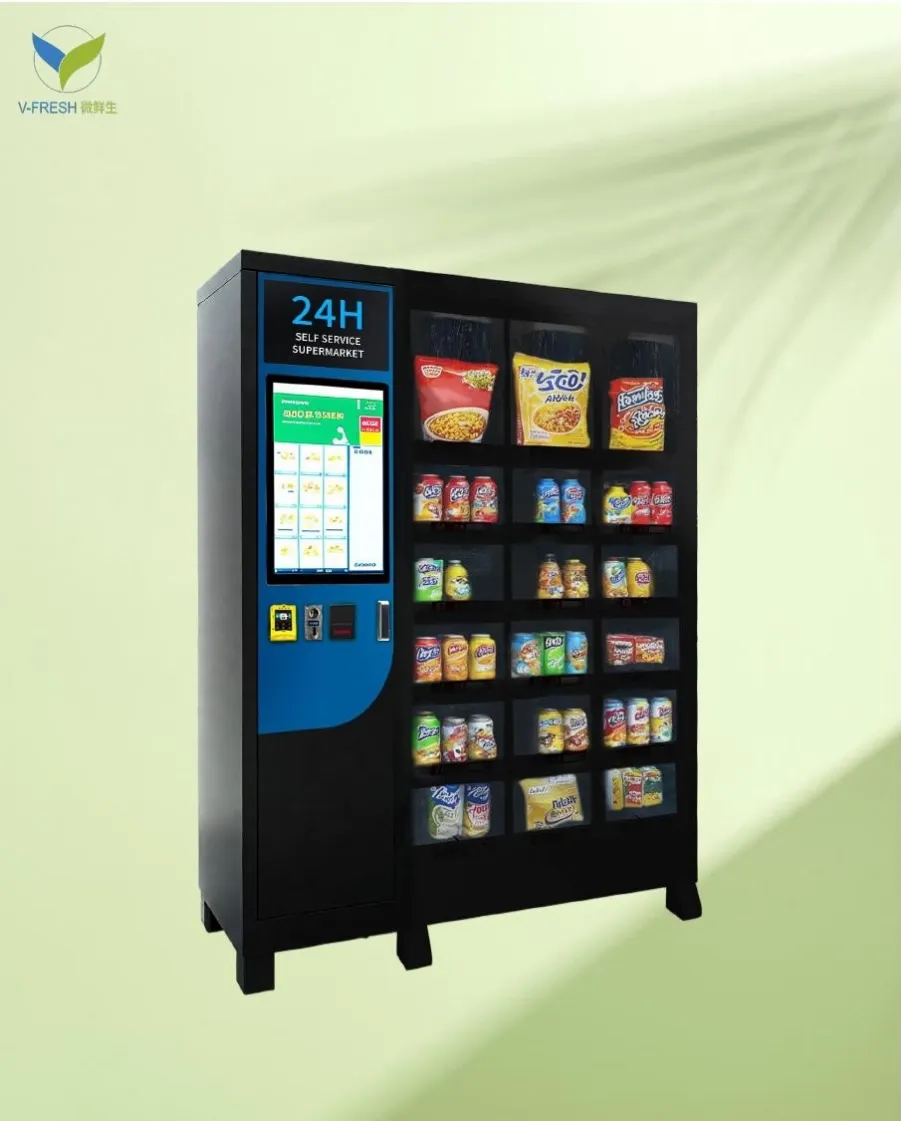
Note the weight and size in the specification as well: a 40-grid machine at 1950 x 1055 x 280 mm and 107 kg is a different installation job from a wall-mounted unit. If the specification does not state the cooling parts, ask — a missing specification is itself an audit result.
2. Payment: check every method your customers will use
VFresh machines support coin, bill, credit card and QR code payment, depending on the model. “Depending on the model” is the part that matters: confirm, for your exact model, which methods are fitted as standard and which are options. Then check:
- Card and mobile payment in your country. Which card networks and mobile wallets work, and has the machine been used with them in your market before?
- Cash handling. If you take cash, what is the bill validator and coin mechanism, and can they be serviced locally? Ask for the make and model.
- Price changes. Can you change prices remotely, or must someone visit each machine? For a route of twenty machines, remote price changes save a day of work every time a price moves.
- Failed payments. What happens when a payment succeeds but the product does not drop? Does the machine refund, retry, or keep the money? Ask for the behaviour in writing, and test it on the trial unit.
- Sales records. Can you see sales by product and by machine, and can you export the records? If you cannot see what sells, you cannot stock the route properly.
3. Aging tests: ask what the factory does before shipping
An aging test is a machine running for a set period before it leaves the factory, so early failures happen there instead of at your site. VFresh checks every machine before shipping, and you should ask any supplier exactly what that check covers. The questions are:
- How long does the machine run before it is packed, and under what conditions — at temperature, with the screen on, with payment tested?
- Which functions are tested: refrigeration, dispensing, payment, screen, locks, and sensors?
- Is there a test record for your unit, with its serial number on it — or only a generic report?
- What happens if a machine fails the test — is it repaired and retested, or shipped anyway?
For the screens, check the sizes on the real products: the wall-mounted perfume machine has a 10.1 inch screen, the floor-standing perfume machine a 42 inch screen, and the helmet cleaning desktop machine a 15.6 inch screen. Screens are the part customers touch most; ask how they are tested and what a replacement costs.
4. Spare parts: check what you can get in six months
Spare parts decide whether a broken machine is back in service in three days or in three months. Before you order, get this list in writing:
- Which parts wear out first on this model — locks, motors, fans, boards, screens — and which of those are stocked?
- How long will spare parts be supplied for your model, and how are they ordered and shipped?
- Which parts are standard and can be bought locally, and which must come from the factory?
- What is the price of the common parts — a screen, a lock, a board — so a repair does not become a surprise?
- Who gives technical support after delivery, in what language, and how fast? VFresh usually replies within 24 hours.
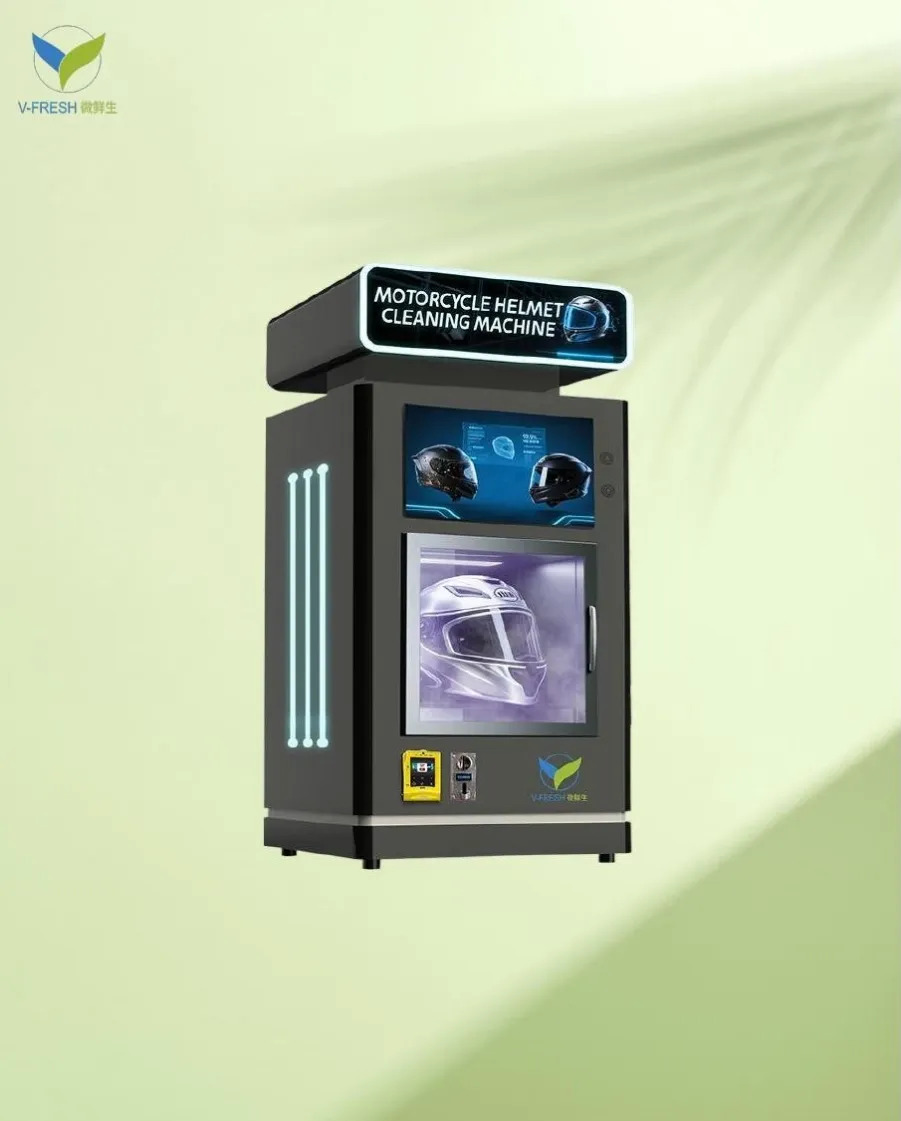
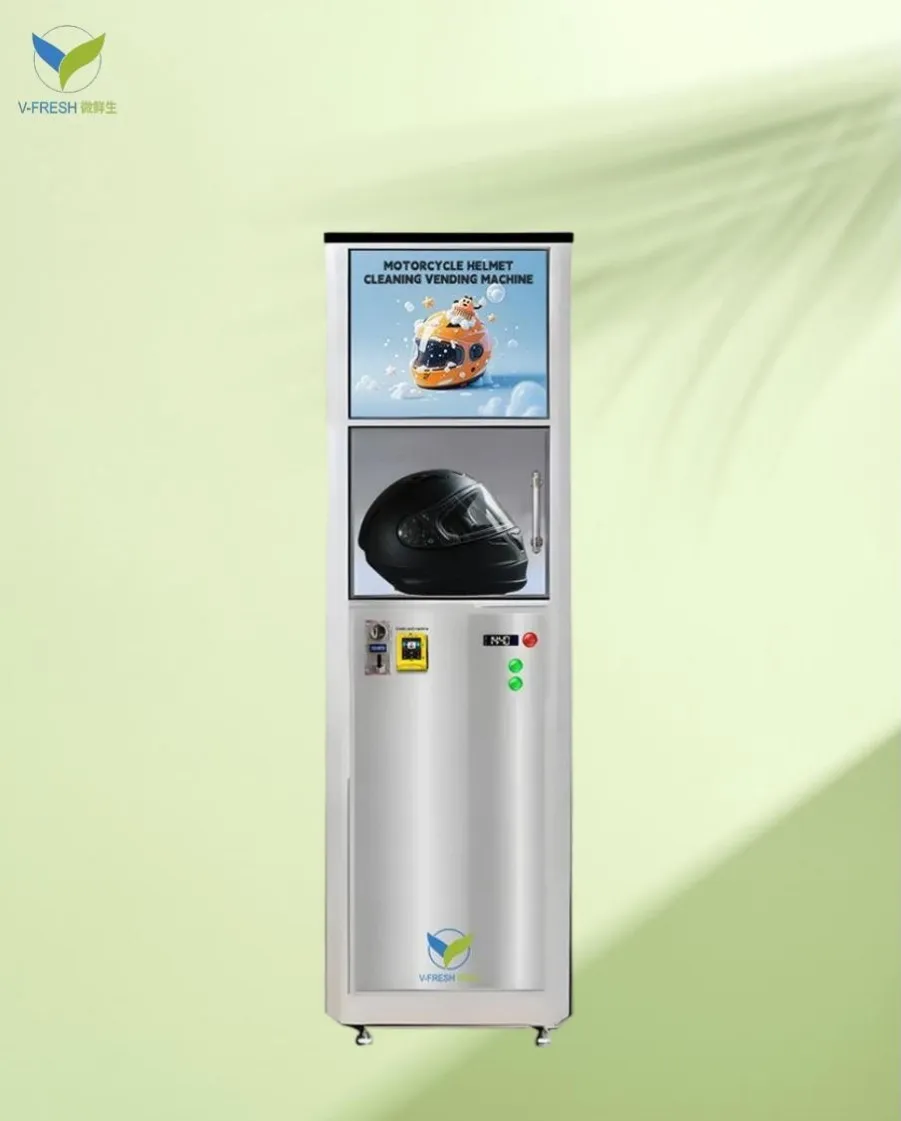
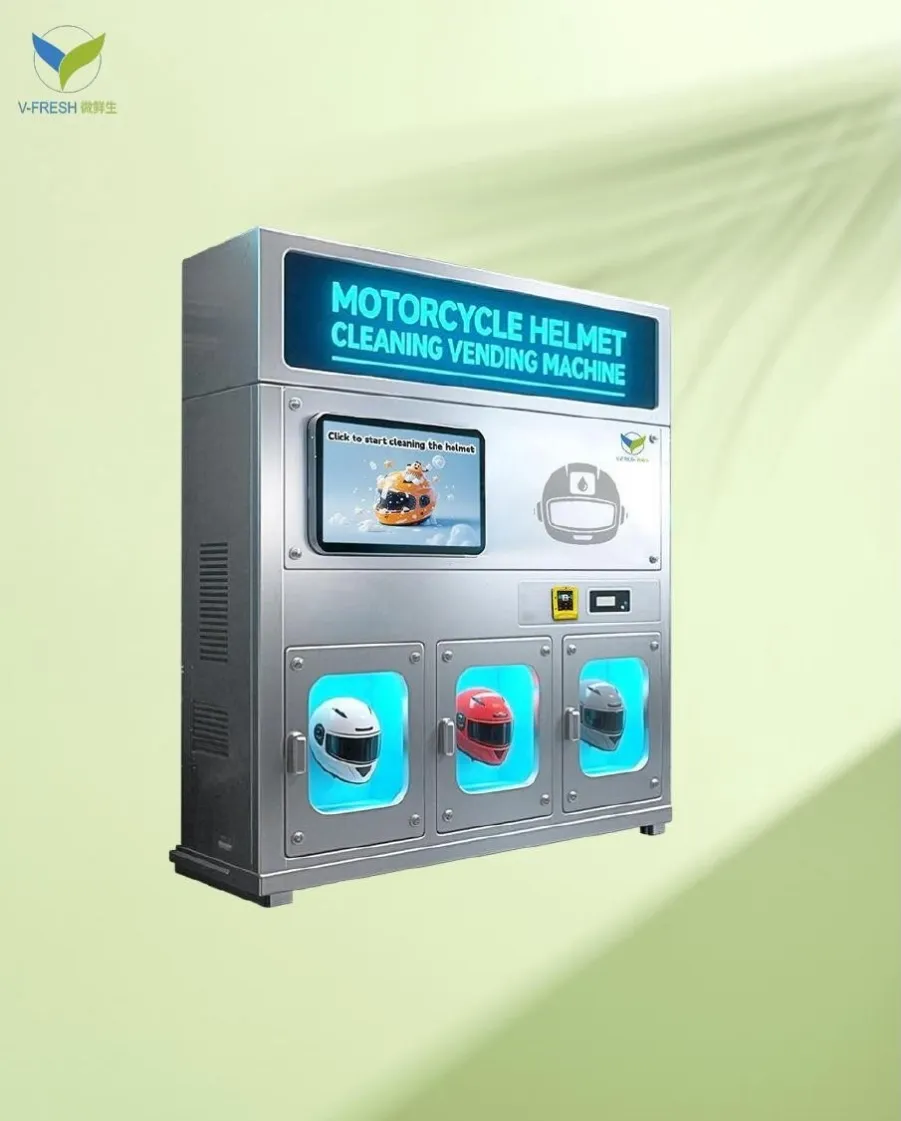
Check the physical sizes when you plan parts and installation. The protein shake machine is 1980 x 700 x 600 mm and 125 kg, with 12 powder pipelines. The helmet cleaning range runs from the desktop unit at 780 x 560 x 620 mm and 50 kg, to the 1-cabin at 1800 x 560 x 560 mm and 114 kg, the 2-cabin at 1800 x 1120 x 560 mm and 250 kg, and the 3-cabin at 1800 x 1680 x 560 mm and 300 kg. A 300 kg machine needs a different delivery plan from a 50 kg desktop unit — confirm delivery, doorway width and floor loading before it ships.
5. Build quality: read the specification like an inspector
Use the specification table as an audit tool. Compare the machines side by side:
| Machine | Size (mm) | Weight | Key check |
|---|---|---|---|
| Wall perfume machine | 550 x 750 x 240 | 30 kg | Wall fixing, 5 x 150 ml fragrances |
| Floor perfume machine | 1900 x 800 x 250 | 120 kg | 42 inch screen, 10 x 150 ml fragrances |
| Grid machine, 40 grids | 1950 x 1055 x 280 | 107 kg | Grid locks, loading height |
| Grid machine, 18 grids | 1920 x 1120 x 280 | 95 kg | Grid locks, loading height |
| Protein shake machine | 1980 x 700 x 600 | 125 kg | 12 powder pipelines, cleaning |
| Helmet cleaning, desktop | 780 x 560 x 620 | 50 kg | UVC + ozone, 15.6 inch screen |
| Helmet cleaning, 1-cabin | 1800 x 560 x 560 | 114 kg | Cabin seal and cleaning cycle |
| Helmet cleaning, 2-cabin | 1800 x 1120 x 560 | 250 kg | Delivery and floor loading |
| Helmet cleaning, 3-cabin | 1800 x 1680 x 560 | 300 kg | Delivery and floor loading |
Ask for the cabinet material, the lock type, and the finish. Ask what the machine weighs in its packaging, and whether it ships assembled or in parts. If the specification is silent on a point that matters to you, the answer is to ask — not to assume.
6. Certificates and warranty, in writing
VFresh machines carry ISO9001, CE and RoHS. Ask for the documents for your model, and check what your market needs on top — see What Certifications Should You Look for When Buying a Vending Machine?. On warranty, the honest position is that warranty terms are to be confirmed with the factory before you order. Get the confirmed terms written into your order — length, what is covered, who pays for shipping parts, and what happens in the first weeks if a machine fails. A warranty that is not written into the order is not a warranty.
Audit scorecard
| Area | Pass | Fail |
|---|---|---|
| Refrigeration | Compressor, range and alarm named in writing | “It cools well” with no figures |
| Payment | Methods confirmed for your model and market | Methods listed without model or market |
| Aging test | Per-unit test record with serial number | Generic report only |
| Spare parts | Parts list, prices and supply period in writing | No parts list at all |
| Build | Full specification with size and weight | Specification missing key figures |
| Certificates | ISO9001, CE, RoHS documents for your model | Documents for a different model |
| Support | Named contact, language and reply time | No support contact given |
Frequently asked questions
How many machines should I order for my first audit?
One. The minimum order quantity is 1 unit. Run the audit on the documents first, then order a single machine, test it at a real site, and only then place the volume order.
What is the most common failure in snack and drink machines?
In practice, cooling and payment cause most site visits: a cabinet that drifts warm, a bill validator that rejects notes, or a card reader that stops connecting. Those are the two areas this audit spends the most time on.
Do I need an aging test if the factory checks every machine?
Yes — ask what the check covers. “Checked before shipping” should mean a run at temperature with refrigeration, payment, dispensing and the screen tested. Ask for the record for your unit.
What spare parts should I hold for a route of machines?
Ask the factory for the parts that wear out first on your model — locks, motors, fans, boards and screens are the usual list — and hold the ones you cannot buy locally. Get the factory's parts list and prices before you order.
How do I check the compressor?
Ask for the make and model, check whether it is a standard part in your country, and ask the price of a replacement. If the supplier will not name it, that is an audit failure.
What certificates should I ask for?
ISO9001 for the factory, and CE and RoHS for your model, as a starting point. Then check what your market needs — UL or FCC documents, for example — and ask for those before the order ships.
What if the supplier fails the audit?
Reduce the order to one trial unit, or walk away. A failed audit on paper becomes a failed machine on site, and the cost of a failed machine is the machine, the stock, the site rent and the site itself.
Conclusion
A manufacturer audit is not a formality. It is the cheapest insurance in this business: a few hours of questions before you order, against weeks of site visits after. Check refrigeration, payment, aging tests and spare parts against real specifications, get the certificates and the warranty in writing, and start with one unit.
To run the audit against a real catalogue, look at the 18-grid machine and the protein shake machine, then send an inquiry with the model, your country and your quantity. Ask for the specification sheet, the certificate documents and the spare parts list for that model — a factory that answers plainly is a factory worth ordering from. If you are still choosing the manufacturer itself, read How to Choose a Reliable Vending Machine Manufacturer for Your Brand.