Pizza Vending Machine for Sale: Cold Chain, Bake Cycle, and Site-Readiness Guide
A pizza machine is a cold store, an oven and a shop in one cabinet. Check the cold chain, the bake cycle and the site before you buy.
You are a distributor or operator who has seen a pizza vending machine draw a crowd — and you are wondering whether one would work at your site. It is an attractive idea: hot pizza, any time, with no staff. But a pizza machine is not a snack machine with a different menu. It is three machines in one cabinet: a frozen store, an oven, and a shop. If any one of the three is wrong — the cold chain, the bake cycle, or the site — the result is a machine that serves cold centres, burnt edges, or nothing at all, in front of customers who will not come back.
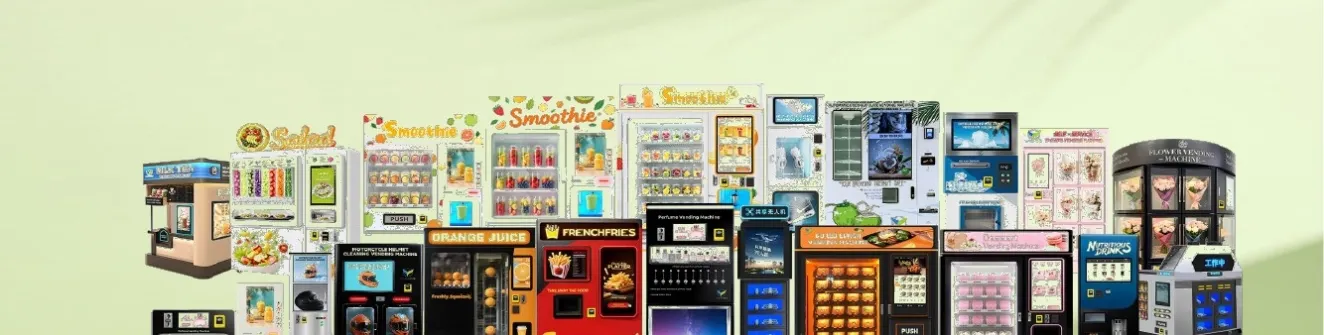
This guide explains what to check before you buy: the cold chain, the bake cycle, and the site. One important note first: VFresh supplies vending machines across a full range — flower, food, pizza, coffee, ice, locker, perfume and helmet-cleaning machines — and the exact pizza models available change with production. This guide is about what the factory can supply and what to ask for; it does not claim that a specific pizza model is in stock. Ask for the current model list and a quote for the model that fits your site.
VFresh Supply is the export channel for the VFresh intelligent equipment base in Foshan, China, run by Foshan Weixianwu Internet Service Co., Ltd. The factory covers 37,700 square metres, holds 700+ patents and software copyrights, is certified to ISO9001, and its machines carry CE and RoHS. It supports OEM and ODM orders, the minimum order quantity is 1 unit, and buyers pay by international bank transfer (T/T) or through Alibaba.
1. The cold chain: frozen storage is the first job
A pizza machine starts as a freezer. The pizzas are stored frozen or chilled inside the machine, and the quality of the finished pizza depends on how well they were stored before baking. Before you commit, ask for your model:
- What temperature does the storage area hold, and how is it set and shown?
- How many pizzas can it hold, and in what sizes?
- How long does it hold temperature if the power drops, and is there a temperature alarm?
- What happens to stock that has been stored too long — is it locked, flagged, or still sold?
- How is the storage area cleaned, and how often?
Apply the same checks as for any fresh food machine — see How to Vet a Fresh Food Vending Machine Manufacturer. A pizza that was stored badly cannot be saved by a good oven. Ask for the cold chain answers in writing, and check them on the trial unit with your own thermometer.
2. The bake cycle: what happens between payment and pizza
The bake cycle is where a pizza machine earns its price — or loses it. When a customer pays, the machine takes a pizza from storage, bakes it, and delivers it hot. Ask the factory to describe the cycle step by step for the model you are considering:
- How it bakes. What heats the pizza, and how is the temperature controlled?
- How long it takes. What is the bake time from payment to delivery, and does it change with the pizza size or topping?
- How even it is. How does the machine avoid a burnt edge and a cold centre? Ask for a video of a full bake cycle, and the result — a pizza baked in the machine, cut open.
- How many it can bake. How many pizzas can it bake in an hour, one after another? A machine that bakes well once and then needs to recover is a problem at a busy site.
- What can go wrong. What happens if a pizza sticks, if the oven fails mid-bake, or if the customer does not collect it? Does the machine refund, retry, or hold the pizza?
- Cleaning. How is the oven cleaned, how often, and which parts come out? A dirty oven is a food-safety problem and a taste problem.
Do not accept a bake time or a capacity figure without asking how it was measured — one pizza on its own, or pizzas baked back to back at a busy site. The difference matters.
3. Site-readiness: the checklist before the machine arrives
A pizza machine has site needs that a snack machine does not. Run this checklist with the site owner before you order:
| Site check | What to confirm |
|---|---|
| Power | Voltage, socket type, and the power rating for your model — an oven draws far more power than a chilled cabinet |
| Space | Floor space, height, door width for delivery, and room to open the machine for loading and cleaning |
| Ventilation and heat | Where the oven heat goes, and whether the room can handle it |
| Floor loading | Whether the floor takes the machine's weight — check the specification for your model |
| Access | Whether you can reach the machine daily for restocking and cleaning |
| Foot traffic | Enough people, at the times pizza sells — late evening and night matter |
| Local rules | Food-safety and electrical rules for your area, before you sign the site |
Measure the delivery route, not only the final spot: doorways, lifts, steps and corners. A machine that cannot reach its site is a machine you own but cannot use. For choosing the site itself, see Where to Place Your First Vending Machine.
4. Food safety and certificates
A pizza machine handles food at every stage — storage, baking and delivery — so food safety is not a formality. Ask for the food-safety documents for the parts that touch food, and check what your local food authority needs before you order. The VFresh factory is certified to ISO9001, and its machines carry CE and RoHS; ask for the documents for your model, and check what your market needs on top — see What Certifications Should You Look for When Buying a Vending Machine?. Agree the cleaning routine in writing: who cleans the storage area and the oven, how often, and what is recorded.
5. Payment, software and stock
VFresh machines support coin, bill, credit card and QR code payment, depending on the model. Confirm for your pizza model which methods are fitted, and whether prices can be changed remotely. Ask whether the software tracks how many pizzas are in stock, which toppings sell, and when stock is running low — and whether expiry dates are tracked. A pizza machine that runs out of its best-selling topping on a Friday night is a machine that is closed when it should be open.
6. Cost: calculate it with the profit formulas
Do not buy a pizza machine on a profit figure from a brochure. Use the formulas in the profit guide: total cost (machine, freight, duty, delivery, installation, first stock) divided by monthly profit (margin per pizza times pizzas sold, minus fixed costs). The numbers that move the answer most are the ones you must get as written figures: the quoted price for your model and quantity, the power rating and your electricity price, the pizza cost and the selling price, the site rent or share, and the cleaning and restocking time. Exact figures depend on the model and the quantity — ask for a quote, and run your own calculation on the quoted figures.
Frequently asked questions
Is there a specific pizza vending machine model in stock?
VFresh supplies pizza machines as part of its full vending range, and the exact models available change with production. Ask for the current model list and a quote for the model that fits your site, and confirm the specification — storage capacity, bake cycle, size and weight — for that model.
How long does a pizza vending machine take to bake a pizza?
It depends on the model, the pizza size and the topping. Ask the factory for the bake time for the model you are considering, measured for pizzas baked back to back, and ask for a video of a full bake cycle.
What power supply does a pizza machine need?
An oven draws far more power than a chilled cabinet, so the power rating for your model matters. Ask the factory for the power rating and the voltage for your country, and check the site's supply before you order.
Where should I place a pizza vending machine?
Where people want hot food late: transport hubs, hospitals, factories with night shifts, universities and busy residential areas. The site needs foot traffic at the times pizza sells, plus power, ventilation and daily access for restocking and cleaning.
How often does a pizza machine need cleaning?
Daily, at minimum, for the storage area and the oven — agree the routine in writing with the factory, including which parts come out and what is recorded. A dirty oven is a food-safety problem and a taste problem.
What certificates should I ask for?
ISO9001 for the factory and CE and RoHS for your model, as a starting point, plus the food-safety documents for parts that touch food. Check what your market and your local food authority need before you order.
Can I order just one pizza machine?
Yes. The minimum order quantity is 1 unit. Order one machine, run it at a real site, and judge it on the bake quality, the cleaning workload and the real sales before you order more.
Conclusion
A pizza vending machine is a good business when the cold chain holds, the bake cycle is even and fast enough, and the site has the power, the space and the late-night traffic to carry it. It is a bad business when any one of those is assumed instead of checked. Check the storage, ask for a video of a full bake cycle, measure the site, and get the certificates and the cleaning routine in writing.
To find out what is available now, send an inquiry with your country, the site type and the quantity, and ask for the current pizza model list, the specification sheet and a quote. VFresh usually replies within 24 hours. You can also look at the 40-grid locker machine for packed food storage, and read How to Vet a Fresh Food Vending Machine Manufacturer before you commit.