Vending Machine Business Profit Guide: Costs, Margins, and Payback Period
No honest profit guide can quote your profit before you know your costs. This guide shows how to calculate margin and payback — and what to ask for a quote on.
You are an operator with one machine in mind and a simple question: will it pay for itself, and how fast? The honest answer is that nobody can tell you that before you know your own costs — not the factory, not a blog, and not a seller who quotes you a monthly profit figure without asking where the machine will stand, what it will sell, and what the site charges. This guide does something more useful: it shows you how to calculate the answer yourself, line by line, so you can test any machine and any site before you spend anything.
One thing this guide will not do is invent profit numbers for VFresh machines. We have no factory prices in this guide, and the exact figures depend on the model and the quantity you order — so the worked examples here use your own figures, and the last section tells you exactly what to ask for in a quote.
VFresh Supply is the export channel for the VFresh intelligent equipment base in Foshan, China, run by Foshan Weixianwu Internet Service Co., Ltd. The factory covers 37,700 square metres, holds 700+ patents and software copyrights, is certified to ISO9001, and its machines carry CE and RoHS. It supports OEM and ODM orders, the minimum order quantity is 1 unit, and buyers pay by international bank transfer (T/T) or through Alibaba.
1. Start with the total cost, not the machine price
First-time buyers usually compare machine prices. Experienced operators compare total cost — the landed cost of the machine plus the cost of getting it running. List every component, and get each one as a written figure before you calculate anything:
| Cost component | What to include |
|---|---|
| Machine price | The quoted price for your model, with the payment system fitted |
| Freight and insurance | Sea or air freight and transit insurance to your port |
| Customs duty and tax | Duty and import tax in your country — ask your customs broker |
| Local delivery | Port to warehouse or site, including any lifting equipment for heavy units |
| Installation | Positioning, power connection, first stocking |
| First stock | The products you load on day one |
| Site costs | Rent or revenue share paid to the site owner, if any |
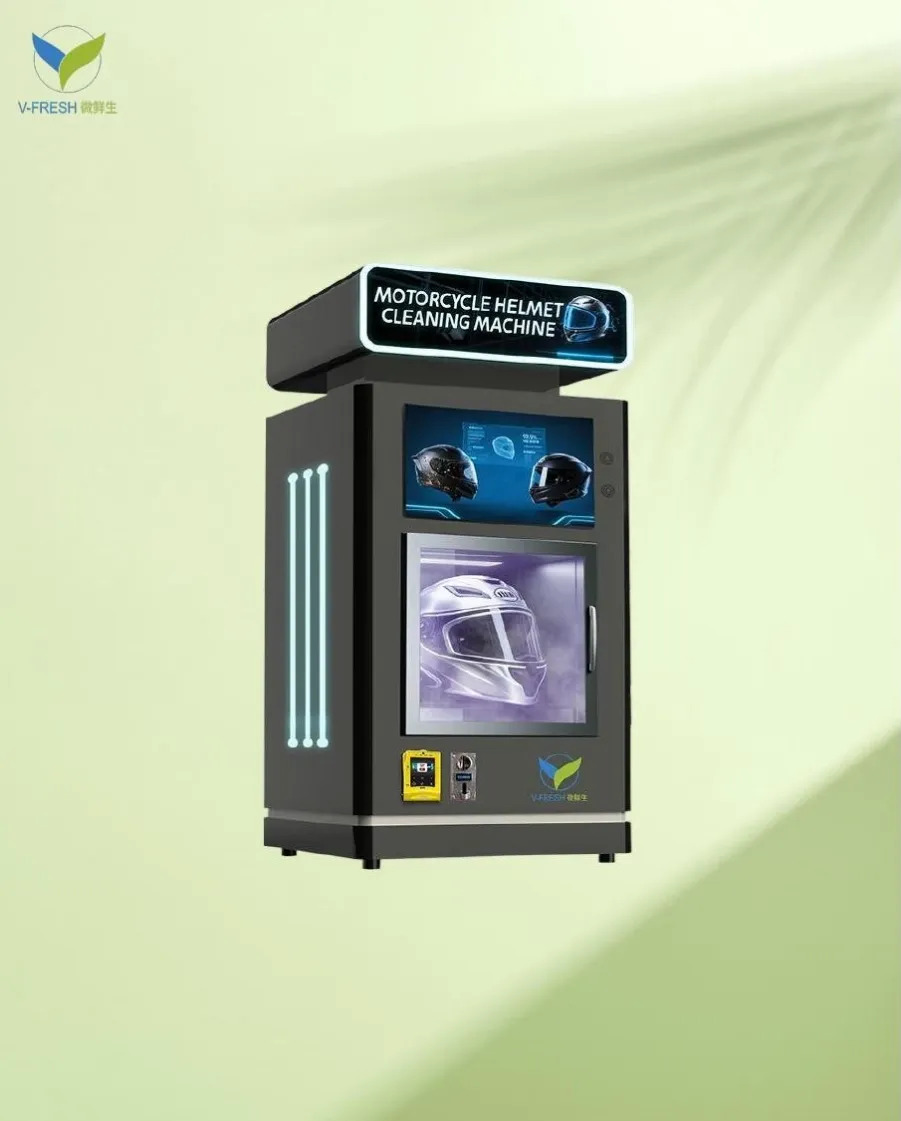
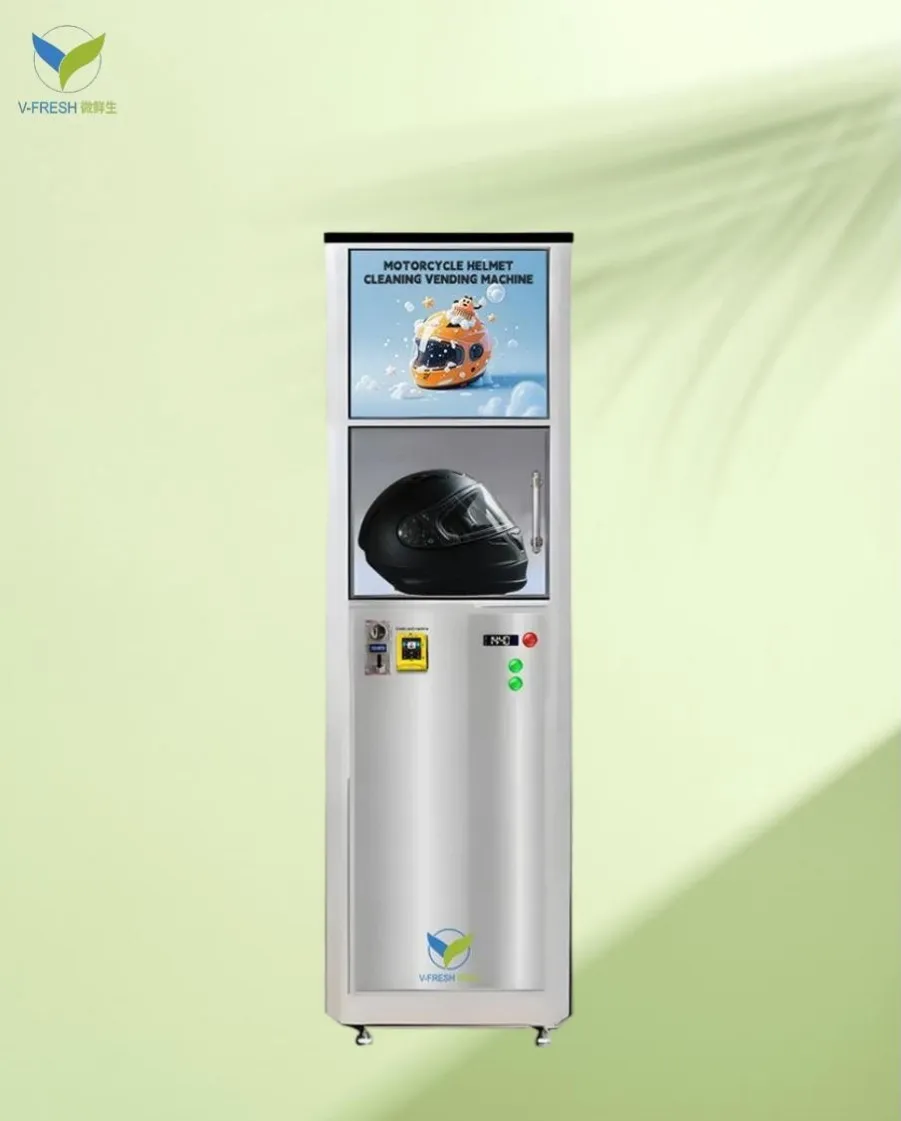
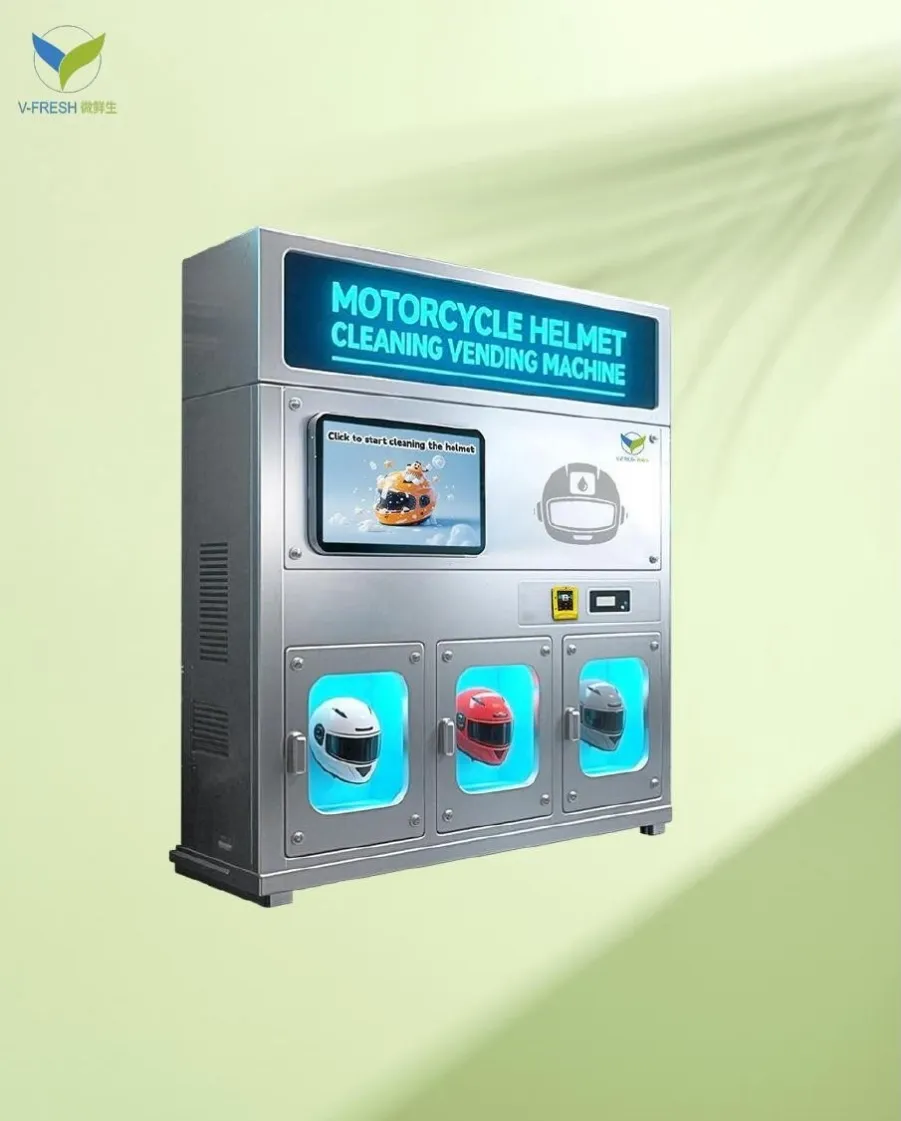
Note the weight when you price delivery: a desktop helmet cleaning machine is 50 kg, a protein shake machine is 125 kg, and the 3-cabin helmet cleaning machine is 300 kg. Delivery and installation for a 300 kg machine is a different job from a 50 kg one. See How to Import Vending Machines from China for the import steps and documents.
2. The margin formula: profit on one sale
Margin is calculated one sale at a time. For each product the machine sells, work out:
Gross profit per sale = selling price − product cost − payment fee − site share (if any)
Then: Gross margin % = gross profit per sale ÷ selling price × 100
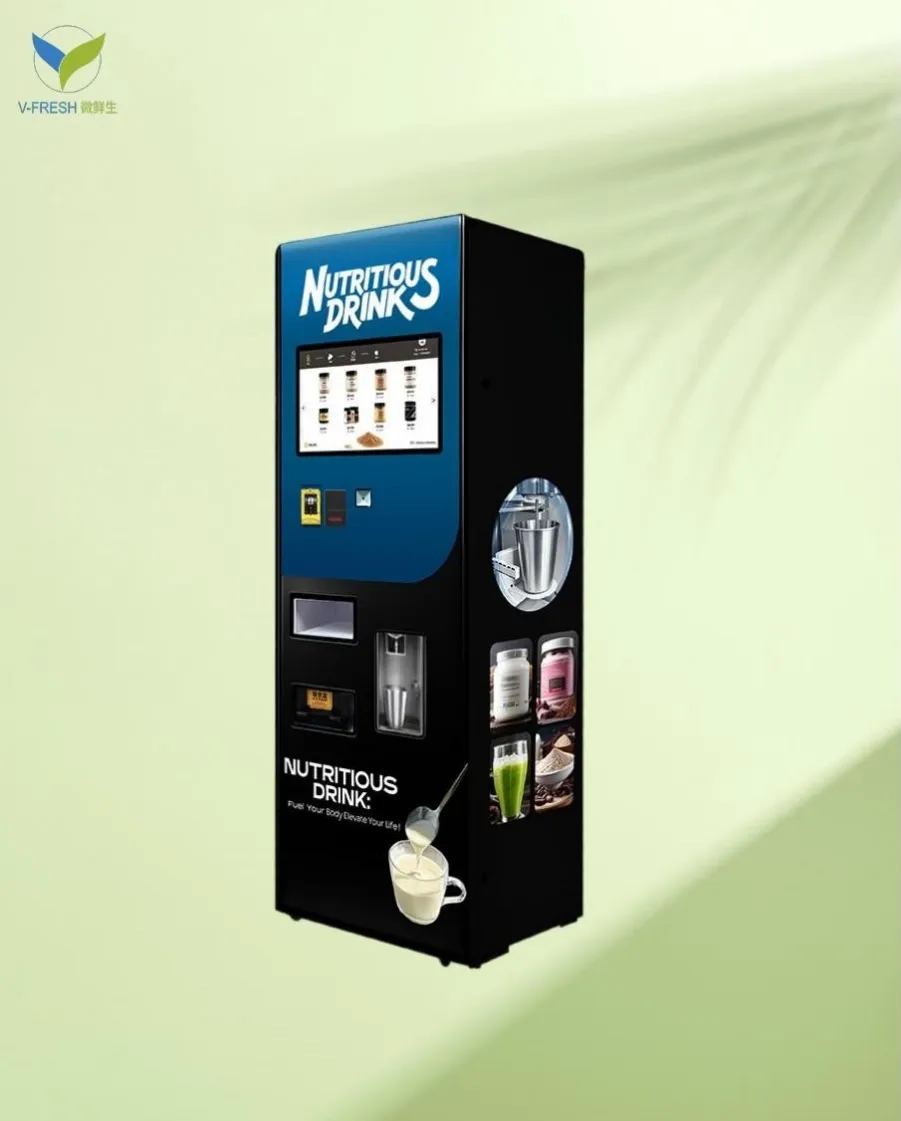
Work through it for every product, not only the best seller. A protein shake sold from a protein shake machine (1980 x 700 x 600 mm, 125 kg, 12 powder pipelines) has different costs from a fragrance sprayed from a wall-mounted perfume machine (550 x 750 x 240 mm, 30 kg, 5 x 150 ml fragrances) or a floor-standing perfume machine (1900 x 800 x 250 mm, 120 kg, 10 x 150 ml fragrances). If you cannot fill in the product cost for an item, you cannot price it — find the cost before you set the price.
Three points buyers often miss: payment fees differ by method, so calculate card, cash and QR separately; a site revenue share is a real cost, so include it in every sale; and waste matters — expired or damaged stock is a cost, and fresh food waste is higher than snack waste. Read Fresh Food vs Snack Vending Machine: Which One Should You Start With? for how the two categories differ on waste and handling.
3. The monthly profit formula: sales minus running costs
One sale's margin tells you little. A machine's profit is monthly, so calculate it monthly:
Monthly gross profit = gross profit per sale × number of sales in the month
Monthly profit = monthly gross profit − monthly fixed costs
Monthly fixed costs include: site rent or revenue share, electricity, restocking trips (your time or a driver's pay, and fuel), cleaning and consumables, payment system fees, software or connectivity fees if any, spare parts used that month, and insurance if you carry it. List them all. A machine that looks profitable on margin alone can lose money once the restocking trips are counted — especially a machine at a quiet site that still needs a visit every week.
4. The payback formula: how long until the machine pays for itself
Payback is the number most buyers actually want, and it is a simple division:
Payback period (months) = total cost of the machine installed and stocked ÷ monthly profit
Use the total cost from section 1 and the monthly profit from section 3. If the monthly profit is small, the payback is long — that is the calculation working as it should. Three things change payback more than anything else: the number of sales per day, which depends on the site; the margin per sale, which depends on your product cost and price; and the total cost, which depends on the model, the quantity and the freight. That is why the same machine can pay back in months at a busy gym and take far longer at a quiet office — the site decides the sales, and the sales decide the payback. Choose the site with the same care as the machine: see Where to Place Your First Vending Machine.
5. Test three cases before you order: good, expected, poor
Never calculate one case. Calculate three, using your own figures:
| Case | Sales per day | What changes |
|---|---|---|
| Good | Your best estimate for a busy site | Higher sales, same fixed costs |
| Expected | Your realistic estimate for this site | Your base case for the decision |
| Poor | Half your expected sales | Tests whether the machine still works at low volume |
Ask yourself: does the machine still pay back in a time you accept in the poor case? If not, either the site is wrong, the price is wrong, or the machine is wrong. Do not order on the good case alone — the good case is a hope, the poor case is the test.
6. Costs operators forget
- Restocking time. Your time has a cost. Count the hours, not only the fuel.
- Electricity. A refrigerated machine runs all day. Check the power rating for your model and your local electricity price.
- Payment fees. Card and QR fees are a percentage of every sale. Include them.
- Repairs. Budget for spare parts. Check the parts list and prices before you order — see the manufacturer audit.
- Site turnover. Sites close, change owner, or ask you to leave. A machine that only works at one site is a risk; a machine you can move is an asset.
- Your own learning time. The first machine takes longer to run than the tenth. That is normal — price it in.
7. How to get the figures you need from the factory
For the machine side of the calculation, ask the factory for a written quote with: the price for your model and quantity, what is included, the power rating, the payment methods fitted, the spare parts list with prices, and the warranty terms as confirmed with the factory. Exact figures depend on the model and the quantity — ask for a quote for your order, and use the quoted figures in the formulas above. Do not use a profit figure from a seller's brochure: your site, your products and your costs are different, and only your own calculation is a real answer.
Frequently asked questions
How much profit does a vending machine make per month?
There is no single answer. Monthly profit is gross profit per sale times sales per month, minus fixed costs — and every part of that depends on the machine, the products, the site and your costs. Run the calculation in this guide with your own figures before you order.
What is the payback period for a vending machine?
Payback is total cost divided by monthly profit. Because both figures vary by model, quantity, freight, site and sales, the payback must be calculated for your order. Use the three-case test in section 5 and decide on the poor case, not the good one.
What costs should I include in the machine's total cost?
Machine price, freight and insurance, customs duty and tax, local delivery, installation, first stock, and any site costs. The full list is in section 1 — a calculation that leaves out freight or duty is not a calculation.
Which costs do first-time operators forget?
Restocking time, electricity, payment fees and spare parts are the usual ones. Count them all in the monthly fixed costs before you decide.
Does a more expensive machine pay back faster?
Not necessarily. A more expensive machine only pays back faster if it sells more or earns more margin per sale. Compare machines with the same formulas, on the same site, using quoted prices for each model.
How can I get the exact figures for a VFresh machine?
Ask for a quote. The exact price depends on the model and the quantity, so send an inquiry with the model type, your country and your quantity, and use the quoted price in the formulas in this guide.
Should I start with one machine?
Yes. The minimum order quantity is 1 unit, and one machine at a real site gives you real sales figures — which is the only reliable input for the next order's calculation.
Conclusion
Profit in vending is not a promise; it is a calculation. Add up the total cost, work out the margin on one sale, subtract the monthly fixed costs, and divide the total cost by the monthly profit. Test the good, expected and poor cases, and decide on the poor one. If the numbers work on your own figures, order one machine and test them at a real site.
To get the figures for your order, send an inquiry with the model type, your country and your quantity, and ask for a quote with the specification sheet and the spare parts list. VFresh usually replies within 24 hours. Then run the formulas in this guide on the quoted price — and if you are still choosing the machine, read Fresh Food vs Snack Vending Machine and Where to Place Your First Vending Machine before you decide.